The Evolution of Muscle Cars
Old School
What is a muscle car? There have been many debates on the exact definition, however, I define a muscle car as an American made coupe equipped with powerful engines that are designed for high-performance driving. The first muscle car was invented in 1949. That’s decades of pure American muscle! In 1949, the Oldsmobile Rocket 88 was introduced to the market with a powerful V8 engine, which made it one of the fastest cars on the road during that time period. This vehicle was equipped with 303-cubic inch engine and a duel-barrel carburetor. With that size engine, the Oldsmobile Rocket was able to push out around 140 horsepower and 260 lb-ft of torque. That may not seem like a lot in the modern era, but in 1949 having 140 horsepower was a big deal. In fact, the car was so fast that laws and regulations were made because police cars couldn’t keep up with them.
After the success of the Oldsmobile Rocket 88, everyone wanted to have a chance to drive a muscle car. By 1955, major car manufacturers took advantage of this opportunity and started producing muscle cars in mass quantity. Chevrolet, Chrysler, Ford and Dodge are the notable car manufacturers. The ultimate goal for these companies were to make a lightweight, reliable vehicle that was affordable to the customers. By 1960, muscle cars were a major part of the American culture and they are only getting better and faster!
New School
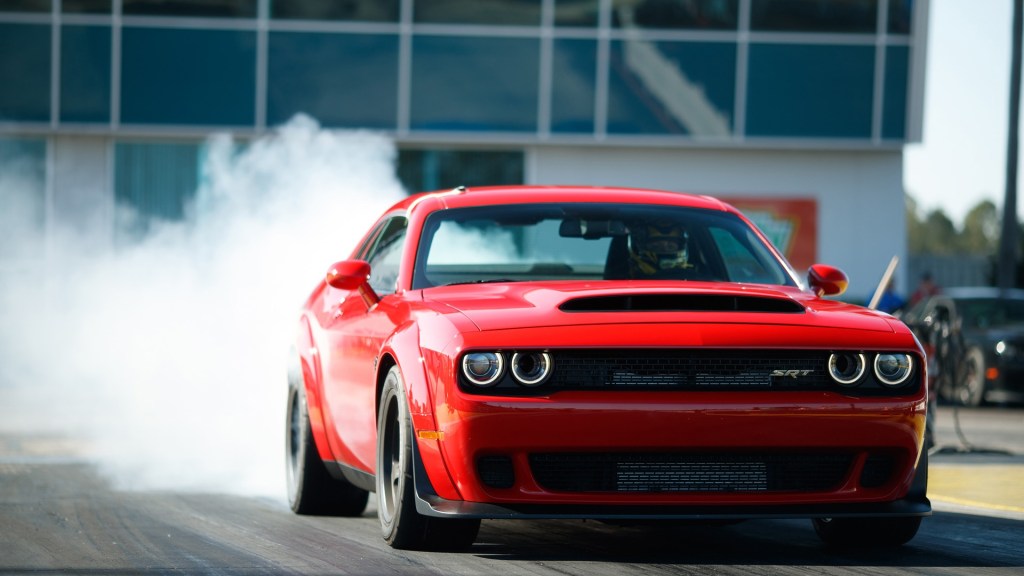
The new generation of muscles may look different, but they still have those reliable, powerful V8 engines that push out a lot of horsepower. One of my favorite muscle cars of this generation is the Dodge Challenger. In 1970, the first Dodge Challenger was invented, followed by the 2nd generation between years 1974-1977. Dodge decided to bring the Challengers back to life in 2008 with the 3rd generation. The newer Dodge Challenger RT and above models are equipped with V8 Hemi engines. The Hemi engines has a hemispherical combustion chamber, which was first invented in 1951 by Chrysler. The hemispherical combustion chamber improves the engine’s airflow and gives a higher horsepower output. These cars are no joke! The V8 powered Challengers can drive 60 mph in just 4.8 seconds and can reach a top speed of 168 mph. If you think that these models are fast, just wait until you see the changes that will be made for the future!
 Cj's Blog